We empty houses, flats, bungalows and estates — furniture, appliances, carpets, the contents of every cupboard, wardrobe, loft and shed — and we leave the property swept and ready for whatever comes next. Our own uniformed crews do the work. We have never used subcontractors.
Most people who ring us are not shopping for a service. They are dealing with a death in the family, a move that has to happen by a fixed date, a tenancy that ended badly, or a house that quietly filled up over thirty years. The job is half practical and half not. We try to be good at both parts.
Nothing is paid up front. No deposit, no card details, no money before the work. You pay by bank transfer once the clearance is done and you have seen it. On a probate clearance we can invoice the solicitor or the executors and wait for the estate.
What a full house clearance includes
One price covers the crew and the load. You do not need to sort anything, bag anything or lift anything, and there is no hourly rate ticking away while the team works.
- Every room emptied — including inside cupboards, wardrobes, drawers and chests
- Lofts, garages, sheds, cellars and outbuildings, not only the living space
- Furniture, white goods, mattresses, carpets and curtains taken as part of the job
- All labour included in the load price, however long the day turns out to be
- Our own trained, uniformed crews in our own vans, never subcontracted out
- Anything reusable offered to charity first, the rest recycled at licensed sites
- Photographs of the property before and after, and a written invoice with our full company and VAT details
If something must not go — a particular chair, a box of papers, the contents of one drawer — say so to the team leader at the start and it stays exactly where it is. That happens on most probate jobs and it is never a problem.
How a clearance actually runs
You tell us what there is
Ring us, or send photographs — a short video walking through the rooms is better still — along with the property postcode. A few pictures tell us far more than any description. For a large or complicated property we will come and look, free, before quoting.
We tell you the loads and the price, before anything is booked
If the property holds more than the photographs showed, you hear the cost before the extra work happens, because the per-load rate never moves. Nobody clears your house first and hands you a bill afterwards.
We can collect the keys
You do not have to be there. Agents, solicitors and neighbours hand us keys all the time. If you cannot attend, we photograph every room before and after and send the pictures the same day.
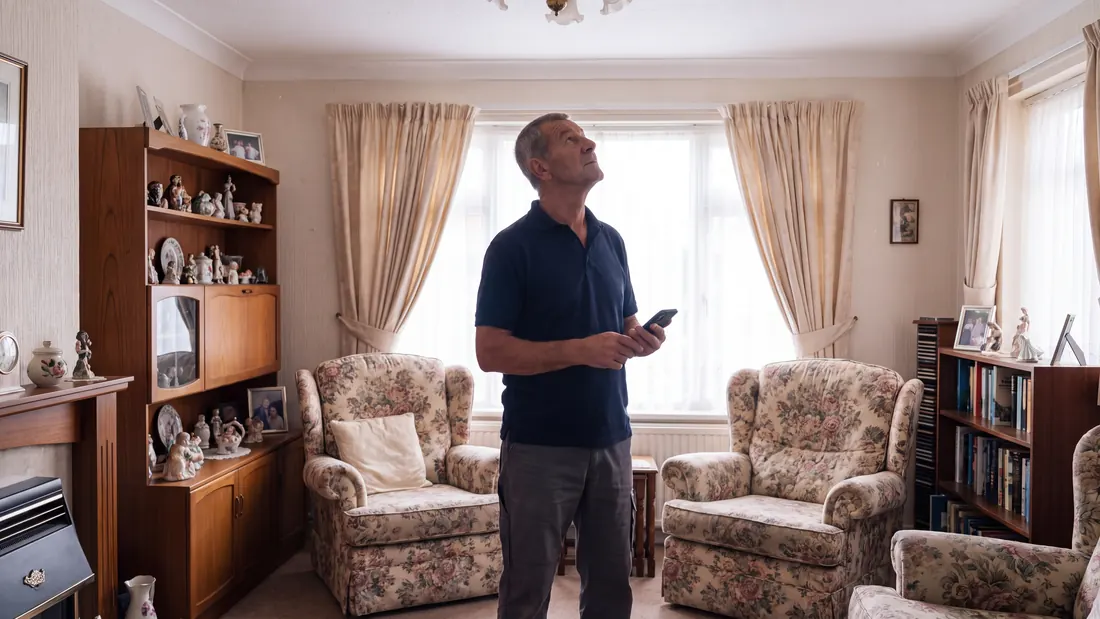
The crew works room by room
Sorting as they go — charity, recycling, disposal — rather than tipping everything into one van. It is slower, and it is the reason so little of what we take out ends up in the ground.
You get an invoice, not a surprise
A written invoice with our company and VAT numbers, plus the waste transfer paperwork if you need it for an estate file.
Probate and estate clearance
A large part of our work is clearing a house after a death, usually instructed by executors, solicitors, or a family who live somewhere else entirely.
We know what the job actually needs. Papers, photographs and documents are set aside rather than binned. Where the estate requires it we note items that look as though they carry value, so they can be valued properly instead of disappearing into a van. Cash, jewellery, war medals and paperwork turn up in the strangest places in a house being emptied, and we would far rather hand them to you than find them later.
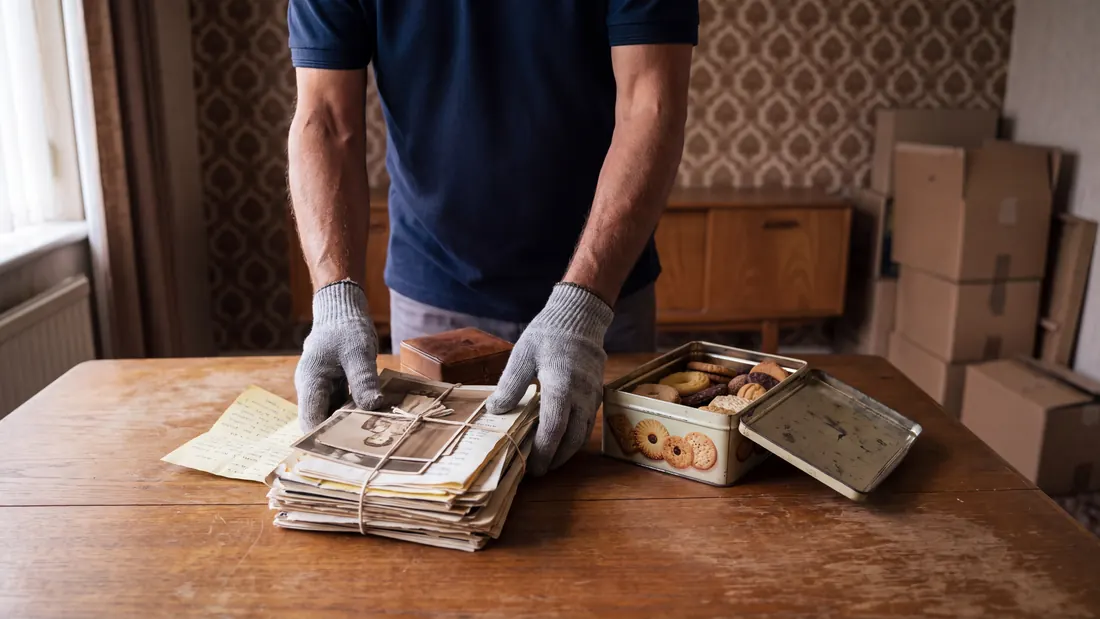
On the money side we can wait. We invoice the solicitor, the executor or the estate direct, and where a clearance is handled through a solicitor we can defer payment for up to six months — so the property is emptied and on the market now, and paid for when the estate settles. In Scotland the grant is called confirmation rather than probate; the arrangement is the same.
Hoarded and heavily cluttered homes
Some properties are packed to at least shoulder height with a path worn between the rooms. We clear these regularly and we do it without judgement — everybody needs a hand at some point. No photographs of the state of the place are shown to anyone, no lectures, no faces pulled on the doorstep.
These jobs need more people, more loads and proper kit — masks, gloves, sometimes a full clean afterwards — and they take longer than the room count suggests. We say so honestly when we quote, because a firm that underquotes a hoarded house either walks away on the day or comes back asking for more money.
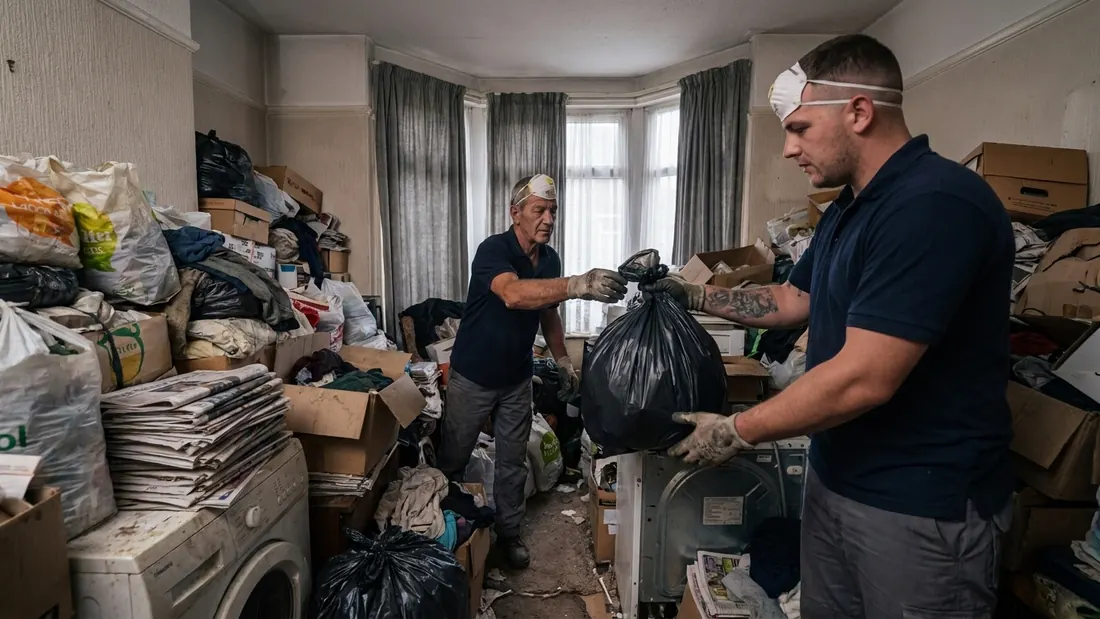
We also find things. Cash inside books, bank statements, an envelope of photographs. It goes to the family.
Garages, lofts, sheds and gardens
You do not have to clear a whole house to call us. Plenty of jobs are one loft, one garage that has not held a car since the nineties, or a shed and the pile beside it.
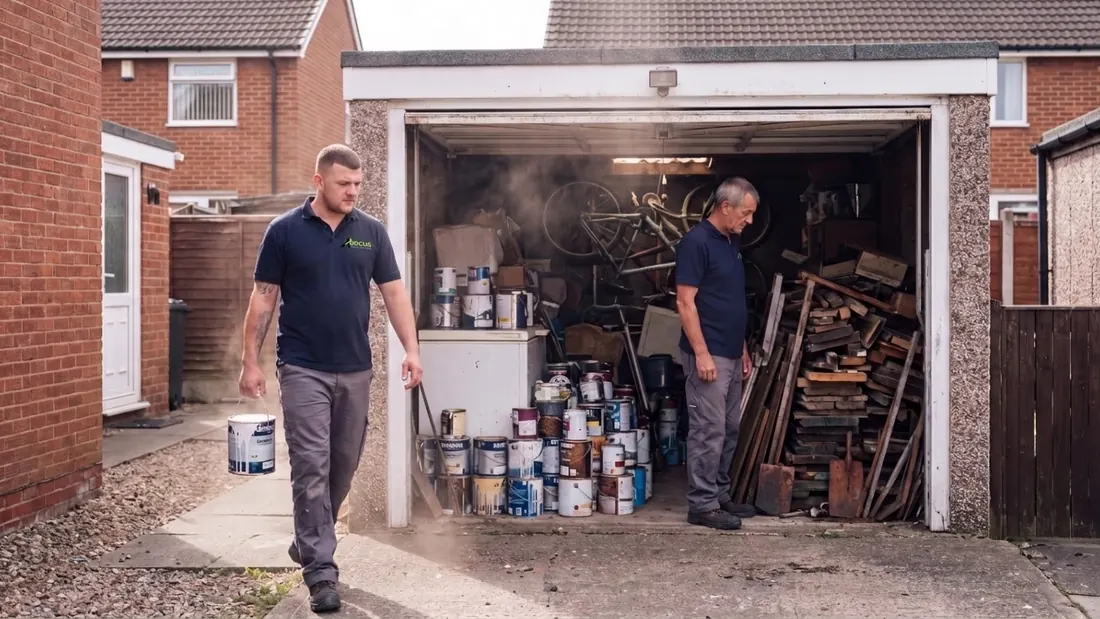
Lofts are where the volume hides — the last place anyone empties and the first place everything goes. Garages are the same story with heavier objects: paint, oil, tools, and a freezer that stopped working years ago.
End of tenancy, landlords and agents
Void properties, belongings left behind, a flat that has to be back on the market on Monday. We work regularly for letting agents, landlords and housing associations, and we understand that with these jobs the date is usually the whole point.
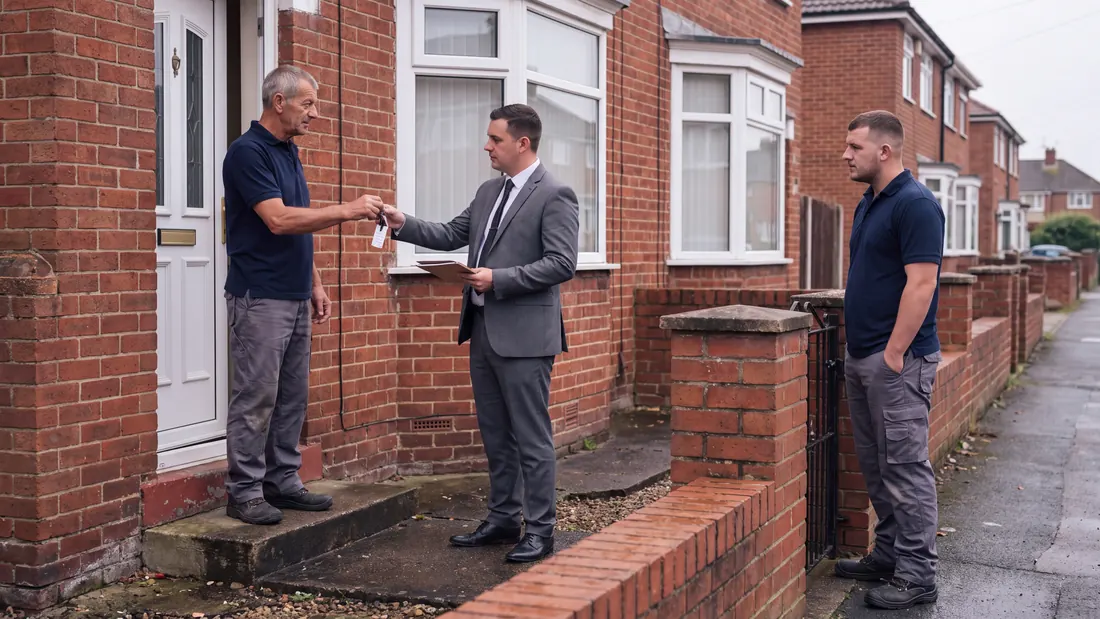
We can work to a fixed deadline, collect keys from the branch, and send photographs of the empty property back the same day so the file is complete.
Offices and commercial
Desks, chairs, filing cabinets, server racks, the contents of a storeroom nobody has opened since the last move. Commercial clearances are priced the same way, by the load, and we can work outside office hours where a building requires it.
Paperwork can be handled confidentially and destroyed rather than tipped, and you get the transfer notes your own compliance file needs.
Pianos, safes and other heavy awkward things
An upright piano weighs about as much as three washing machines and will not go round the turn of a staircase unless it is handled properly. Same story with a safe, a cast-iron bath or a full-size snooker table.
We take them as part of a clearance and price them separately, because they need extra people and a different disposal route. A piano is from £350 +VAT to remove and dispose of. Mention it when you ring — a piano discovered on the morning of the job is the one thing that genuinely holds a clearance up.
What it costs
A full house clearance starts at £695 +VAT per load. That covers the crew and the first load. Every further load on the same day is half price.
One load will empty up to a three-bedroom house of ordinary contents. A packed three-bed can be three loads, or six. That is why we price by volume and not by bedroom count.
Why we do not quote "per bedroom"
Anyone giving you a single fixed price for "a three-bed" without seeing it is guessing, and you feel the difference when the final bill arrives. The number of bedrooms tells you nothing about how much is inside them.
What actually drives the price:
- How much there is — volume, not room count
- How cluttered it is, and whether any of it has been sorted already
- Heavy or awkward items: piano, safe, bath, snooker table
- Access — stairs, lifts, and how far the van has to park from the door
- Items that carry a fixed disposal charge, listed below
- Anything needing a special disposal route
How to read a "clearance from £35" advert
You will see very low starting prices advertised. They are not usually lies — they are the price for one item. One chair. A few bags left at the kerb. The moment a crew has to come inside, sort, carry and make several trips, the real figure is many times that.
Ask any cheap quote a single question: is that to clear the whole property, or per item? We would rather publish our real starting point than win the click with a number you would never actually pay.
Items that carry a set disposal charge
A few things cost money to get rid of legally, and the recycling centres charge us for them. You hear about these when you book or at the walk-round — never afterwards.
| Item | Charge |
|---|---|
| Under-counter fridge or freezer | £45 +VAT |
| Upright or chest freezer | £75 +VAT |
| Mattress | £25 +VAT each |
| Upholstered furniture — sofa, armchair | £25 +VAT each |
| Piano, removal and disposal | from £350 +VAT |
| Plasterboard | from £75 +VAT |
| Paint tins, gas bottles, tyres | from £7.50 +VAT |
Sofas and armchairs carry a charge because of the fire retardants in the padding, which the law now treats as persistent organic pollutants: since January 2023 they cannot be mixed with ordinary waste and have to be incinerated separately. It is not a rule anybody invented to charge you — it applies to every waste carrier in the country.
We do not remove asbestos. If we find it we stop and tell you who can.
Giving reusable items to charity reduces what is left to dispose of, and so reduces what you pay.
No surprise bills
If you have no idea how much there is, that is completely normal. Booking secures the crew and one load at the base rate. On arrival the team walks through the property, tells you what it will actually take and what that costs, and you decide how you want to proceed before anything moves.
Where it all goes
What can be used again is left until last. Suitable furniture, working white goods, kitchenware, books, tools, bedding and clothing go to charity shops and reuse projects. Metal goes for scrap.
Everything that cannot be reused is loaded first and taken to licensed commercial transfer stations. A few household recycling centres, mostly in remote and rural areas, do take trade waste, but only by prior arrangement — and we pay to tip there, as we pay to dispose of every load we carry. Worth knowing if a quote comes in very low on the understanding that it is all just going to the local tip.
Our waste carrier registration is CBDU419679, issued by the Environment Agency. Transfer notes come back from every load and we pass them to anyone who needs them for an estate file or a compliance record. Fridges and freezers travel separately for regulated degassing, and mattresses are counted individually.
Who we are
Abacus was started in 2007 by Bill Brosnan as a family business, and it is still run that way. The aim then was not complicated — build it on doing what you said you would do — and most of our work still arrives because somebody recommended us.
We have cleared thousands of properties since. What that teaches you is fairly plain: turn up on the day, say the real price at the start, and treat the house and the things inside it as though they mattered to somebody, because they did.
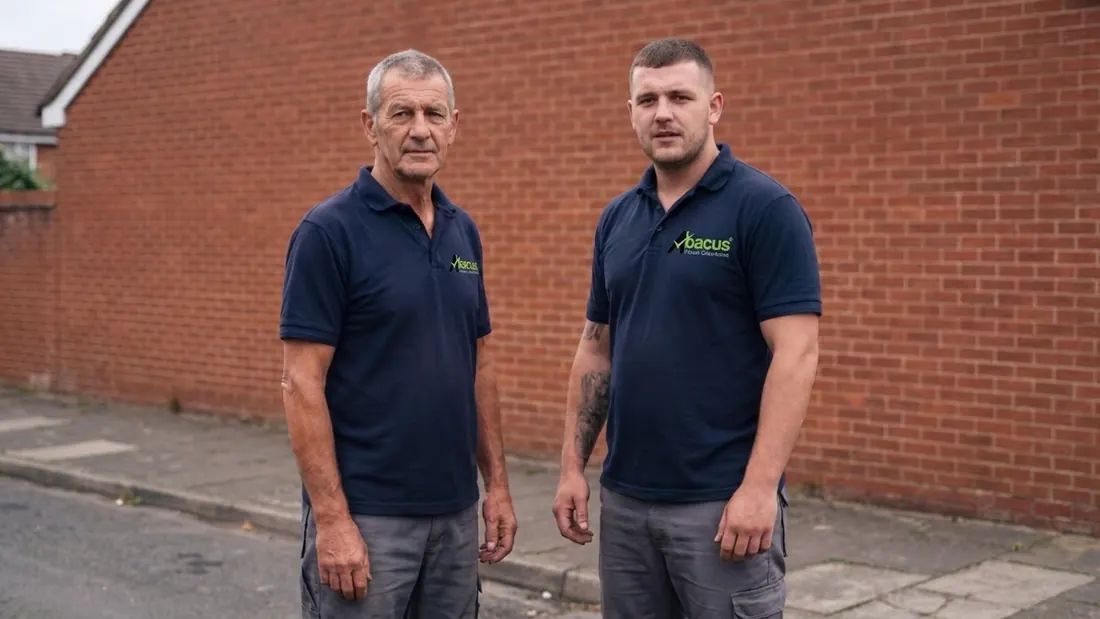
People have thanked us in writing for as long as we have been going. In the early years that meant handwritten letters, a good number of which we still have. These days the same thing arrives on Trustpilot.
Who calls us in
Alongside families, we are booked regularly by organisations that need a clearance done properly and documented properly — the NHS, government departments, city and borough councils, national charities, solicitors and estate agency chains.
Public sector and healthcare













Estate agents and solicitors










Charities and institutions





Licensed, insured, accredited
 SafeContractor approvedHealth and safety accreditation, audited annually.
 Registered waste carrierEnvironment Agency, CBDU419679. Transfer notes for every load.
Phone lines are open Monday to Saturday, 9am to 5pm. The form on this page goes through at any hour, and photographs sent by WhatsApp get you a price faster than anything else.