The City of Westminster is ten postcode districts as far as we are concerned, and house clearance in Westminster is work that starts at the kerb rather than at the front door. SW1H, SW1P and SW1V run down towards the river, W1G, W1H, W1J, W1S and W1U cover Mayfair and Marylebone — Harley Street, Hanover Square, Savile Row and the streets off Piccadilly — and WC2N and WC2R sit either side of Charing Cross, down past the Royal Academy end of town towards Somerset House. Pimlico sits in SW1V. In every one of them the emptying is the easy half of the day. Getting a Luton van within carrying distance of the door is the other half, and that is the half we plan first.
In June 2024 we cleared a jewellery business in W1S, one of the small shop units in Mayfair, and that one came together in about a day and a half of phone calls. It went out as a single load: the team in, the unit emptied, everything booked through regulated recycling and disposal, with a monitor and one POP item on the paperwork. A POP item is an upholstered chair or sofa, and since the persistent organic pollutant rules came in those cannot be crushed in with general waste — they travel separately and are burned under permit. The monitor goes down the WEEE route, which is a different lorry again. Their office wrote to us afterwards: "My email address is fine thank you so much for accommodating us at such short notice."
Short notice in W1S also means the congestion charge zone and a unit with no back door and no yard behind it. Whatever comes out goes out the way the customers came in. That is the ordinary state of things in the Mayfair arcades and the small units around them. It is why, on a commercial job as much as a domestic one, we ask about the route in before we ask about the contents.
Where it all ends up matters more than most people expect. Furniture still fit to be sat on or slept in gets offered round the reuse schemes and the charity warehouses that still take bulky goods. Not every shop does, and in central London the ones that do are usually full by Wednesday. Everything else is weighed in at a permitted transfer station, and the transfer notes come back with the driver rather than being promised and forgotten. Ask for a copy and you get one; a fair number of executors and managing agents want the paperwork on file, and they are right to.
Getting a van to the door in W1 and SW1
This is the awkward part of working in the City of Westminster, and it's worth being straight about it. The council here is its own beast — a Greater London borough with more visitor traffic per yard of kerb than anywhere else we go. Almost every district we're talking about. SW1H around St James's Park, SW1P behind the Abbey, W1G and W1U up in Marylebone, W1H, W1J across Mayfair, W1S, and WC2N and WC2R either side of Charing Cross. Sits inside the congestion charge zone, and all of it is inside the ULEZ. There is almost no free kerb. A few of the main roads are red route and most of the rest is permit-holder or pay-by-phone. A Luton van on a single yellow at eleven in the morning will be photographed before the second load is down the stairs.
So we plan it beforehand. Where a bay can be suspended, we apply to the council for the suspension in good time, because Westminster wants notice and will not be hurried on the morning itself. Where a bay can't be suspended, we pay the meter and keep the ticket, and it goes over with the completion photographs at the end of the day. In the mansion blocks and the purpose-built estates there is usually a porter, a goods entrance and a lift with a booking sheet. An hour spent squaring that with the porter on the Friday saves three hours on the Tuesday. In the Georgian conversions above the shops it is stairs, always, with a turn at the top that a three-seater will not go round. We measure before we lift rather than after.
The order of the day follows the kerb as well. Wardrobes, bed frames and anything else that has to be broken down come out first while the van is empty and the lift is free. The loose stuff and the bagged waste go on last, over the top. On a Marylebone or Mayfair house clearance that usually means an early start, the team at the door for nine, and the bulk of it away before the streets fill up.
When a solicitor or an executor is running it
A good share of our Westminster work is probate, and it rarely comes from someone standing in the flat. One probate house clearance in W1G was instructed by a firm of solicitors several hundred miles away in Fife, handling the estate from there. It ran over three working days in October 2021. One day in the middle of the month with a same-day second load, then both teams back at the end of it to finish, along with a mattress and a small fridge freezer that had to go off separately as hazardous. The paralegal handling the estate wrote: "Further to our telephone conversation this afternoon, I will arrange to have your invoice paid from estate fund and will email you when our Cashroom has set up/made the payment."
That is the normal route and it suits us. We can invoice an executor, whoever the grant names, or the solicitor directly, and there is nothing to pay before the work. Probate clearances are also the ones where the schedule slips for good reasons — a beneficiary who wants one more look round, a valuer who hasn't been, a grant that hasn't come through. Tell us and we move the date. What we ask is that you tell us before the van is loaded and on its way.
If nobody wants to be there, they don't have to be. We collect keys from an agent, a neighbour or a safe. The team leader photographs the property on arrival and again once it's empty, so there's a record of the state it was in and the state we left it in. Anything of sentimental value that turns up gets set aside and posted on — a photograph album, a box of letters, the odd bit of jewellery. We ask up front what to look for, because a drawer of paperwork looks identical to a drawer of rubbish until somebody tells you otherwise. If more of the estate work is what you're after, there's a fuller account on our probate house clearance page.
What we won't put in the van on a Westminster house clearance
There are things we have to leave, and things that go a different way entirely. Fridges and freezers are classed as hazardous and are handled under their own route, from an under-counter one up to an American-style unit. Tins of paint, aerosols, gas canisters and fire extinguishers go separately as well, because a van of general household waste can't legally carry them mixed in. Tyres the same. Upholstered furniture is the POP rule again. Sofas, armchairs, dining chairs with padded seats, office chairs, futons and bean bags all sit under it, and they are kept apart from the load and incinerated under permit rather than tipped.
None of that is a reason to hide it from us. Tell us on the phone and it is in the plan for the day instead of being an argument in the hallway. The same goes for anything heavy and awkward. A piano, a safe, a workshop bench — because those need the right number of people and, in the mansion blocks, a word with the porter about the lift.
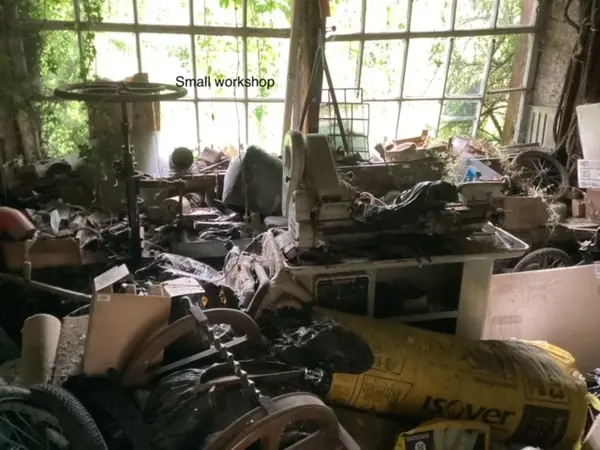
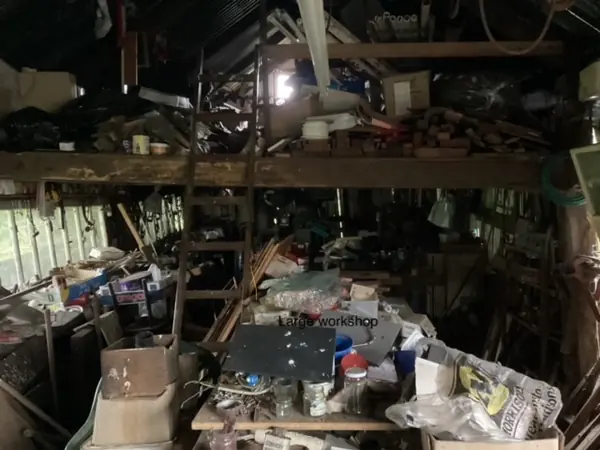
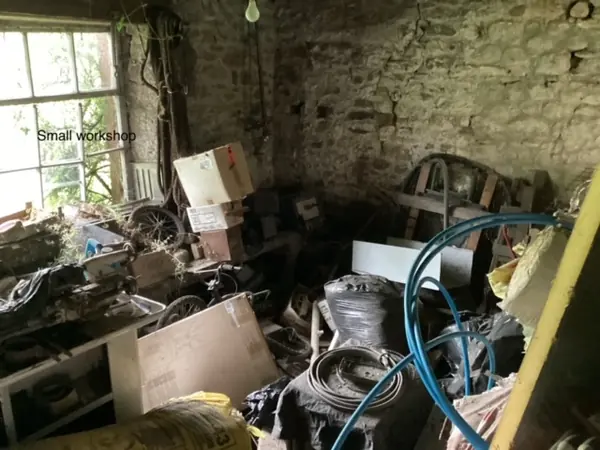
Properties that have filled up over the years are fine. We do a fair number, we bring more hands and more loads, and there is no commentary from the team about the state of the place. What we do ask is that you mention it beforehand so the day is booked long enough and the van count is right.
The kinds of house clearance Westminster asks for
Flat clearance in the SW1 and W1 blocks
Most of what we do here is flat clearance rather than houses. Purpose-built blocks in SW1P and SW1V, mansion flats around Victoria and St James's, upper floors above the shops in W1H and W1U. The questions are always the same three: which door does the van get to, is there a lift and does it need booking, and how many turns are there on the stairs. Answer those on the phone and the rest of a flat clearance is straightforward.
End of tenancy clearance in Westminster
Landlords and managing agents ring us at the gap between tenants, usually with a deadline attached. An end of tenancy clearance in Westminster is normally a part clear — the fitted things and the white goods stay, the tenant's leavings and any tired furniture go, and the flat is left swept. We photograph it empty so there is something to show the incoming tenant and the inventory clerk.
Hoarder house clearance in Westminster
A hoarder house clearance takes longer, needs more hands and more loads, and needs a quiet team. In a block where neighbours share a lift and a lobby, discretion matters as much as the clearing does, so we work in unmarked bags where we can and keep the landing clear between runs. Sorting comes first, because paperwork, cash and jewellery turn up in the strangest places in a hoarded flat, and none of it goes on the van until somebody has looked. There's more on how we run a hoarder house clearance on its own page.
Office clearance and single items in W1
The Mayfair job above was a commercial one, and we do a steady trickle of them — small offices, studios, shop units, chambers. Desks, chairs, screens and cabinets, with the electricals going out as WEEE and the upholstered chairs as POPs. At the other end of the scale, a single item is a perfectly good booking: one sofa off a fourth floor, a bed frame, a fridge freezer. If it is loose waste rather than furniture, house rubbish removal is the page you want.
Where we work from and how to reach us
The Westminster patch runs from the river up through Whitehall and St James's, across Mayfair and Marylebone, down through Victoria and Pimlico, and east to Covent Garden and the Strand. Charing Cross, Victoria, Marylebone and Pimlico are the stations most people give us when they're meeting the team, and if you're handing keys over rather than waiting in, one of those is usually easiest. We come in early, and the team is at the door for nine.
We work either side of the borough boundary as well, and often in the same week. house clearance in Islington to the north, house clearance in Russell Square just over the WC1 line from the Strand, house clearance in South Kensington to the west, and house clearance in Kennington once you're across Lambeth Bridge. Anything in that ring is a normal day's work from where we start.
We are fully insured, and we are registered with the Environment Agency as an upper-tier waste carrier under licence CBDU419679, which you're welcome to check before you book anyone, us included. Ring 0800 046 5555 with the postcode, the floor, whether there's a lift and whether anything's coming out of a loft or a store cupboard, and we'll give you a date and a written quote. Photographs through the form on this page do the same job if you're not in the country. Most clearances need a day or two's notice, no more.
Questions we get asked about house clearance in Westminster
Can you invoice the solicitor or the executor?
Yes. We invoice the executor named in the grant, or the solicitor's firm directly, and the account can be settled from the estate fund once the firm has it set up. There is nothing to pay before the work is done, and the quote is free and puts you under no obligation.
Do we have to be there on the day?
No. We collect keys from an agent, a porter, a neighbour or a key safe, and the property is photographed on arrival and again once it's empty so you can see what was done. Plenty of our Westminster house clearance work is booked by executors and landlords who never see the inside of the place.
How much notice do you need for a house clearance in Westminster?
Usually a day or two. Where a parking bay has to be suspended, the council needs longer than we do, so tell us early if the street looks impossible — it's the suspension, not the clearance, that sets the date.
What happens about parking and the congestion charge zone?
Every district on this page is inside the congestion charge zone and inside the ULEZ, and there is very little free kerb. We either apply for a bay suspension or we pay the meter and keep the ticket. Either way it is sorted before the van sets off, not argued about on the pavement.
What can't you take?
Fridges and freezers, paint, aerosols, gas canisters, fire extinguishers and tyres all go by their own routes, and upholstered furniture is handled apart from the rest of the load under the POP rules. Asbestos we don't touch at all — that's a licensed contractor's job. Tell us what's there when you ring and none of it is a surprise on the day.
Ring 0800 046 5555, or send a few photographs through the form on this page, and we'll tell you what a house clearance in Westminster is going to take.