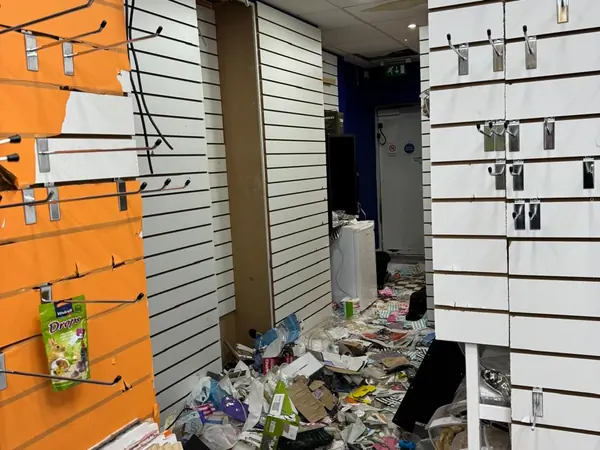
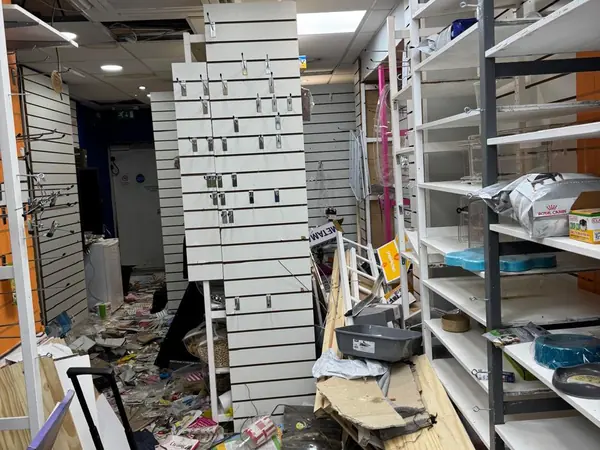
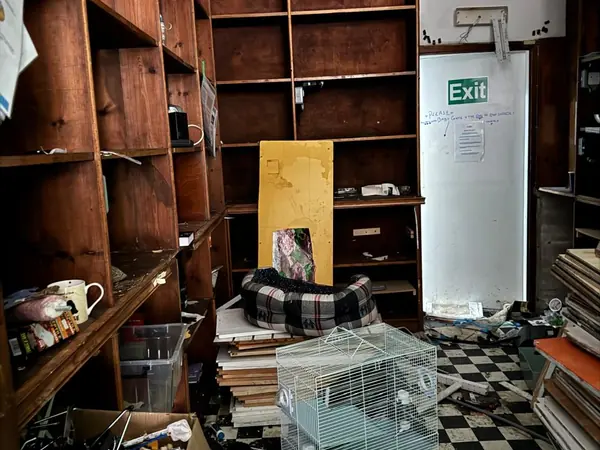
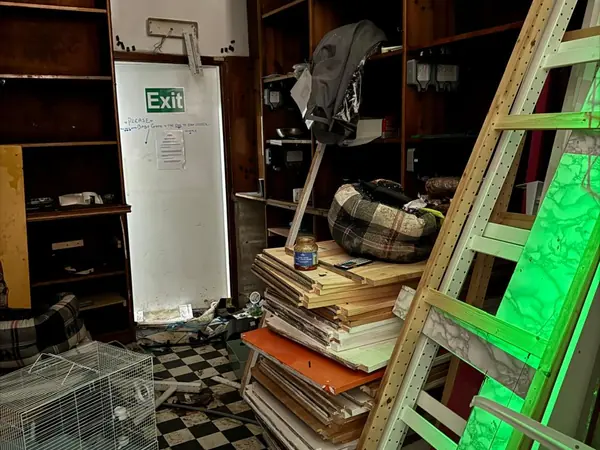
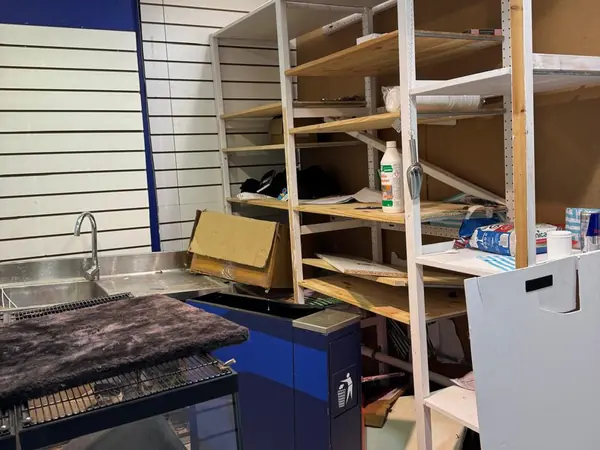
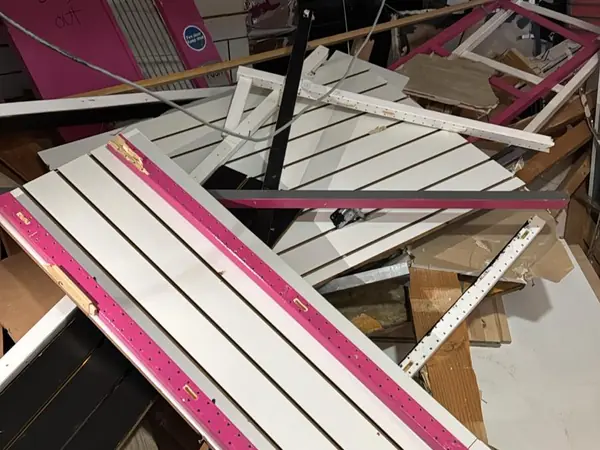
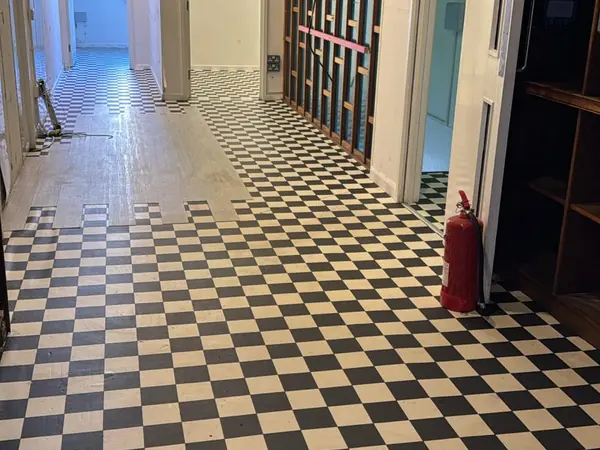
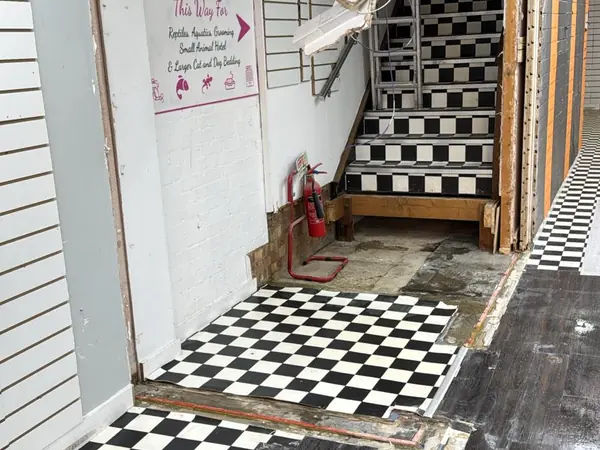
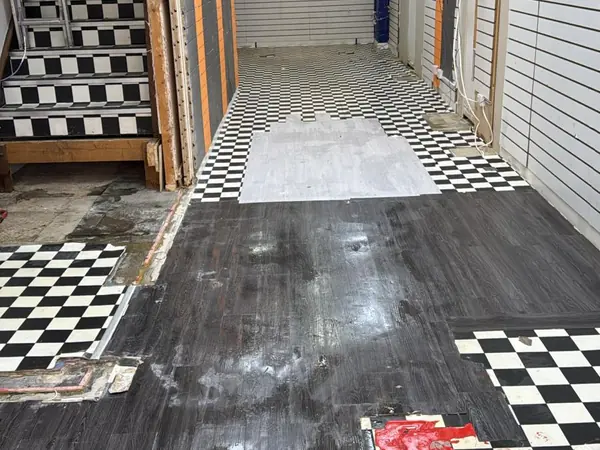
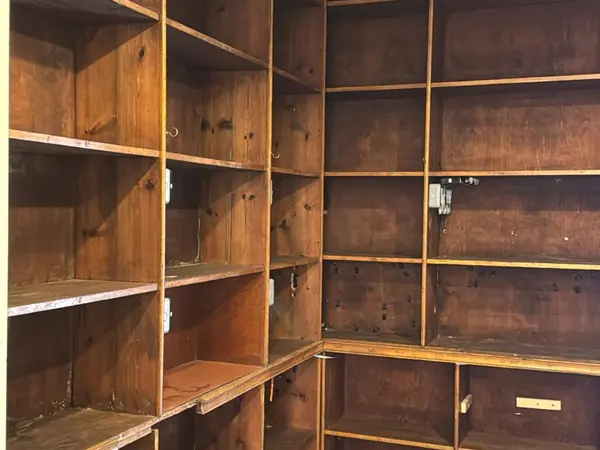
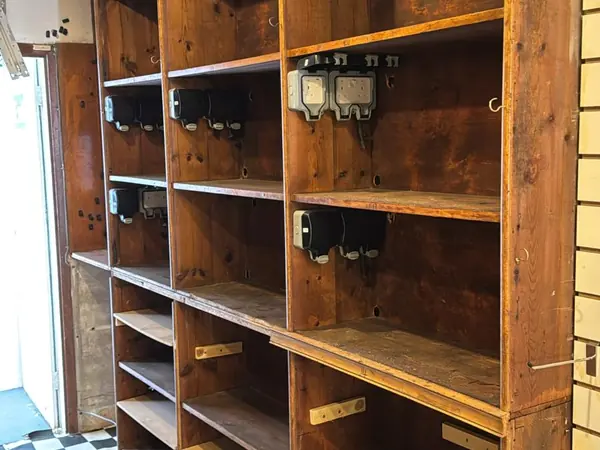
Bloomsbury is unlike anywhere else we clear — a district of Georgian garden squares given over to the university, the law and the book trade as much as to homes, and the work reflects it. A recent Russell Square house clearance was one of a run of jobs for a building contractor refitting a set of rooms in WC1N. Clearing out the old fittings and the debris between phases; other calls are a scholar's flat to be emptied, or a set of chambers changed hands. Much of house clearance in Russell Square and the streets around it isn't a family house at all but an institutional or professional space. And the ones that are homes tend to be flats packed with a lifetime's books.
Georgian squares given over to learning
The housing here is grand and only half residential. Around Russell Square, Bedford Square, Gordon Square and Tavistock Square the tall Georgian terraces have long since become university departments, publishers' offices, solicitors' and barristers' rooms, small hotels and mansion flats, all mixed together on the same street. What that means for a clearance is a building with a porter or a facilities manager rather than an owner at the door, a service lift to book. Rules about when and how a van may come. Tell us what sort of space it is and who holds the keys. We shape the day to the building rather than the other way round.
Fit-outs, chambers and departmental clear-outs
Because so much of Bloomsbury is institutional, a great deal of our WC1B and WC1E work is neither probate nor lettings but a clear-out of a working space. A university department being reorganised, a barristers' chambers refurbished, an office or a small hotel stripped back. We handle the old desks and shelving, the IT and the files (shredded and certificated where they're confidential), the fittings and the refit debris, working around a live building and its hours. If you run a department, a set of chambers or an office around the squares, or over in the legal streets of WC1R and WC1V. Need it cleared between terms or between tenants, that's squarely the kind of job we're set up for.
The contractor's job in the first paragraph ran over months rather than in a day. It's worth setting out because it's typical. A Georgian block in WC1N, rooms coming apart a phase at a time. Us back again each time a phase finished: sometimes a part-load of stripped-out fittings and packaging, once a much larger load when a whole floor came out together at the end. One of those visits wasn't a clearance load at all. It was an asbestos collection, which leaves under its own licensed route with its own paperwork and never travels with the furniture. That's the shape of a good deal of contractor work around the squares. Not one dramatic Russell Square house clearance day, but a standing arrangement with somebody who will turn up when there's nowhere for a skip to stand and the staircase is the only way down.
Estate and probate house clearance in Russell Square
Where the WC1H and WC1N work is a home, it's usually a mansion flat held for many years by someone who lived among their books. And the books are the story of it. Walls of them, boxes of them, far more than a family ever expects, alongside papers, prints and heavy old furniture. We take the time to sort rather than sweep: anything that looks of value or interest set aside for the executors. Where a college library, a specialist dealer or a charity might want a collection, held back for collection rather than tipped. Probate work is invoiced to the estate with the solicitor copied in, nothing asked before we begin. The flat run on keys with photographs at the end where the family's elsewhere.
Most probate house clearance in Russell Square and the districts around it is instructed by somebody who isn't in London at all. One flat clearance we did up in NW8, on the St John's Wood edge of the patch, came through a solicitors' practice a couple of hundred miles north in Yorkshire. Which is how a lot of probate house clearance reaches us. The property here, the file up there, everything between us done by email and post. It came out in a single load: the furniture and the household contents, plus a mattress and a small fridge-freezer, both of which have to be kept separate and dealt with under the rules that apply to them rather than tipped in with the rest.
Their office was on pre-arranged appointments only at the time. The paperwork turned out to be the fiddly half of it, not the clearance. The instruction that came back to us was short enough to quote whole: "Please return documentation via the letterbox."
That is the ordinary shape of probate house clearance here. An executor or a solicitor at a distance, a set of keys. A need for the file to be complete when it's over. So we photograph before and after, send the waste paperwork with the invoice. Put anything that looks like a document, a passbook or a photograph aside for the family rather than deciding for them.
The confidential and the careful
An institutional clearance carries duties a house doesn't, and we take them seriously. Files and records that are confidential — student data, case papers, patient or client records — are dealt with by proper confidential destruction with a certificate to prove it, not simply carried out with the furniture. Anything that looks personal or important in an estate flat is set aside for the family or the executors. It's the same instinct either way: in a district built on scholarship and the law, going through a place with care rather than just emptying it is most of the job.
What happens to the contents
Desks, shelving, sofas and cabinets, the white goods, the carpets, the boxes and the refit rubble — it all leaves together. Whatever's still of use we try to route to a charity, a reuse project or. Books, a library or dealer, rather than to landfill; the rest goes out through a licensed transfer station, every load documented, with waste transfer notes and confidential-destruction certificates where a job needs them. We hold waste carrier's licence CBDU419679. Paint, gas bottles and genuinely hazardous material fall outside what we're licensed to carry. We'll point you the right way for those.
Getting a van to a Bloomsbury door
Access is half the job in WC1B and WC1E, and it wants sorting well ahead. The squares and the streets off them are busy and almost entirely controlled. A full day usually needs a suspended bay from Camden council, arranged a few days in advance. The institutional buildings and mansion blocks add a service lift to book, a porter or facilities desk to sign in with. A loading window to keep to. Tell us how the building runs and where a van can stand, and we plan around it. It's the same story a mile out in any direction. The Clerkenwell yards in EC1M, the narrow ends of Hatton Garden in EC1N, the hill up into N19 — the loading takes the planning and the clearing takes care of itself.
Small hotels, guest houses and short-let flats
Bloomsbury has more small hotels and guest houses per street than almost anywhere in London, and they bring their own kind of work. A house clearance in Russell Square is as likely to be a tired guest house being refurbished or changing hands as a family flat. We clear the old beds, wardrobes and units room by room, floor by floor, working around a business that often can't close. Take the lot in coordinated loads rather than blocking the street. If you run a hotel or a short-let building around the squares and need it stripped for a refit or emptied between owners, it's routine. Quoted from photos, scheduled around your bookings, and documented at the end.
A Russell Square house clearance of that kind is really a small commercial strip-out. We treat it as one: coordinated, tidy, and off the street as quickly as the loading allows. The same crews do a straightforward end of tenancy clearance in WC2B or WC2H when a letting agent calls. That's usually a morning rather than a week.
How a Russell Square clearance day runs
A morning start is usual, signing in at the porter's or facilities desk, or meeting whoever holds the keys. Nothing needs sorting beforehand — the team works through the rooms, the shelves and the store cupboards as they reach them, lifts the carpets. Leaves the space clean and clear. Everything's photographed before and after for the file, which an executor, a facilities manager or a solicitor following the job from elsewhere will want to see. In a Bloomsbury building the booked lift and the sign-in are half the day's logistics. Knowing the place beforehand keeps it running to time. We've been doing this since 2007, and most of what's changed in that time is the paperwork, not the stairs.
Around Russell Square — the patch we cover
Russell Square and Bloomsbury sit across WC1B by the British Museum, WC1E around Gower Street and the university, WC1H towards Euston and Cartwright Gardens. WC1N on the Queen Square and Great Ormond Street side. East and south of that the numbers change without the streets changing much: WC1R for Gray's Inn, WC1V around Red Lion Square, WC1X running up past Mount Pleasant, then WC2A for Lincoln's Inn Fields, WC2B for Kingsway and Drury Lane. WC2H for Covent Garden and the Charing Cross Road end. W1T takes in Fitzrovia on the far side of Tottenham Court Road.
The same vans cover a good deal more than the squares. Clerkenwell and Smithfield in EC1M, the jewellery streets of EC1N, the Amwell side of EC1R; Islington in N1, the new blocks of N1C behind King's Cross, Holloway in N7, Archway and Tufnell Park in N19, Highgate in N6. Then west and north: Camden Town and Regent's Park in NW1, Kentish Town in NW5, Hampstead in NW3, Kilburn and West Hampstead in NW6, St John's Wood in NW8, Cricklewood and Neasden in NW2, and Maida Vale in W9.
Some of those places have pages of their own, because they're big enough to want one: house clearance in Camden, house clearance in Islington and, just over the eastern boundary, house clearance in Finsbury. Same crews, same licence, different streets. If you're somewhere in between and can't tell which page you belong to, say the district and the type of building on the phone and we'll sort it out in a sentence. 0800 046 5555, or send photographs through the form on this page.
Russell Square station and the university keep the quarter in constant motion, but behind the Georgian fronts there's always a space turning over. A flat wound up, a department reorganised, chambers or a mansion flat changing hands — and needing clearing between one occupant and the next.
Russell Square and Bloomsbury house clearance — common questions
Why should I use you?
Because we work these buildings all the time — for the contractors refitting them, the institutions running them and the families winding up a flat — we're licensed and fully insured. We clear with care, confidential paperwork and valuable books included, rather than just tipping. A real figure comes down the phone, with the lift and access booked in.
How much does a Bloomsbury house clearance cost?
By volume — what comes out, not the hours. A part-load or a small flat is at the light end; a full mansion flat, a library of books, or a department's worth of desks and files is more. Send a few photos and we'll give you a real figure. The access sorted before the day.
How and when do I pay?
After the work's done, by bank transfer, no deposit up front. Probate work is invoiced to the estate with the solicitor or executor copied in; institutional and contractor work goes to your agreed purchase order, closed off with photos and any certificates on the file.