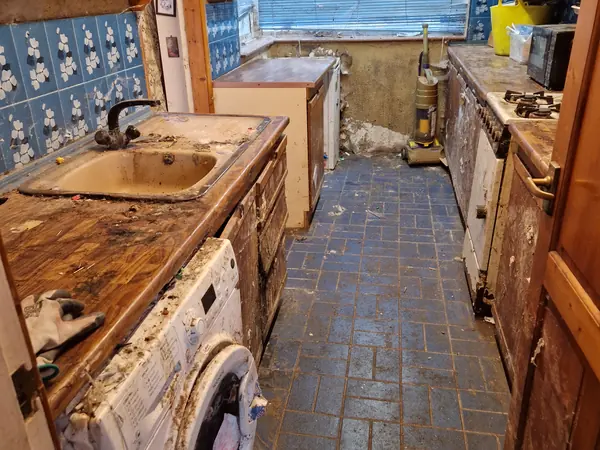
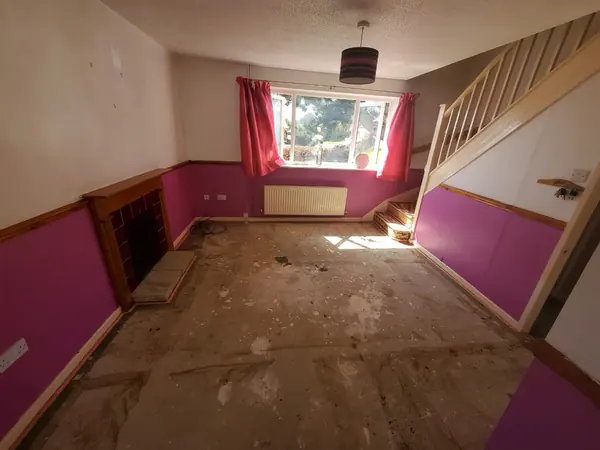
The instruction for one Barbican flat came from a solicitor's office a few minutes' walk from its front door, still inside EC1A. Nobody from the family was in London at all. That is the ordinary shape of house clearance in Barbican: a firm holding an estate file, a flat in EC2Y shut up for months. Every decision made on paper before the van has anywhere to stand. The whole flat came out in a single load. One load, one day, keys back, and the invoice went to the firm acting for the estate rather than to a person. Which is how most of these are settled, and one of the first things executors ask us about.
The other estate flat we cleared on the estate, also EC2Y, was instructed from the other end of the scale: a firm out in Surrey that had never been up on the highwalk and had no particular reason to be. Again one load, again one block, again nobody from the family on site. That isn't us being clever with a schedule — it is what house clearance in the City of London actually looks like. A good share of the flats here belong to people who live somewhere else, and the person with authority to say "clear it" is a solicitor with a file rather than a son with an estate car.
We don't treat that as second best. Written instructions and photographs are, if anything, easier to work from than a relative standing in the hall changing their mind about a sideboard, provided the questions get asked properly at the start. What we do insist on is that the flat is described honestly. Block, floor, lift, what stays — because on this estate nothing about access can be guessed from the outside.
Both jobs were the Barbican shape almost exactly: somebody holding the keys to a home they don't live in, a short list of what must survive. A lift standing between a three-seater sofa and the nearest place a van can legally stand.
The podium is the job
This isn't a street with front doors on it. Residents walk in on the highwalks, one storey up from the traffic, while the vans live underneath on the service roads and in the car parks. So the useful questions aren't about how much furniture there is. They're about which block, which level, whether the flat is reached off a walkway or from a lift lobby, how far the carry is from the lift to a loading point, and what the head height is on the way into the car park. Get those wrong and a two-man day turns into a three-man day. A house clearance in Barbican is planned around the building first and the furniture second.
We ask them all before we put a price on anything. Beech Street runs under the estate and has its own traffic restrictions, the City of London Corporation polices loading around the estate closely. There is nowhere on the estate you can simply leave a caged tipper on a double yellow while somebody wrestles a wardrobe down a stair. If a bay needs booking through the estate office or a porter, that's a phone call worth making a week early. On the towers we plan around the lift: fill it, take it down, walk back up empty, repeat. Slow, but nothing gets dropped and no neighbour gets a scratched wall.
Both of those EC2Y estate flats came out in one load each precisely because the lift was working and the loading point was reachable from it. Where that isn't true, the same flat becomes a two-day job and we say so before anyone books. The smaller collections we run round the rest of the City behave the same way: a half load out of a unit in EC1M, a collection over in EC3A, another in WC1V. Each one begins with the same three questions about which door, which floor and where the van can stand. Every one of them also crosses into the Congestion Charge zone and the ULEZ. We set off earlier than people expect.
What a City flat usually holds
Barbican and Golden Lane flats were built to be lived in economically, so the storage is clever and full. Fitted cupboards to the ceiling, a deep hall store, kitchens with everything built in, and. Because there are no lofts and no garages — every spare thing a household accumulated over forty years is inside the flat with it. Books are the big one around here. Boxed books weigh more than people expect, and a study wall of them can be half a load on its own. Then there is what nobody counts as furniture until it comes off the wall: a fold-down ironing centre, a serving hatch counter. That is what makes house clearance in Barbican flats heavier than a floor plan suggests.
Upholstery is the other. Upholstered seating — sofas, armchairs, padded dining and office chairs — falls under the POPs rules. Mattresses are counted separately because the transfer station takes them on their own. They travel separately and go to a facility permitted to burn them.
One booking last October shows how the photograph route works when nobody wants a survey. The customer sent pictures room by room, we read them back as an extra-large load. The list that came out of it was three POP items, three mattresses, one upright fridge and four tins of paint, with an extra hour allowed on top for the carrying. The fridge had to be handled as hazardous waste, the mattresses went their own way, and the three upholstered pieces travelled under the POPs rules. That alone was most of the reason the load was as big as it was.
Access had already been solved by the person who booked it, in one line: "I have permit for visitor parking bay". The team met them at the property at ten on the Friday morning. The whole thing ran on one visit. Worth adding that the person who booked it and the person who paid for it were not the same. Happens more often than you'd think and causes nobody any trouble as long as it is said at the start.
Small collections count too
Not everything here is a whole flat. A fair share of our EC work is one corner of a job. A stripped-out kitchen, the contents of a store cupboard, a couple of appliances left when a tenant moved on. One customer had us back three or four times across the City in as many years: a half load out of premises in EC1M, then a collection in EC3A, then one at a building in WC1V, then a quarter load from a second EC1M address one December. Different doors, different porters, same team and same van. Those get handled the same way as a full Barbican house clearance: same transfer station, same paperwork at the end of it, same questions before the day is booked.
That customer paid from a home address well outside the City and was never on site for any of it. Is very ordinary in the EC districts. Somebody holds the key, somebody else holds the file, and the two of them are rarely in the same building. It is why we confirm in writing what is going and what is staying before a van is loaded.
Where the stuff actually goes
Furniture, kitchenware and clothing that somebody else would genuinely use gets set aside for reuse rather than tipped. The City and Islington have plenty of small charity shops and community projects within a mile of Aldersgate, and a decent bookcase does more good there than in a skip. Personal paperwork is the opposite: statements, deeds and medical files go for secure destruction, not into a load. What can't be reused goes to a permitted transfer station and comes back to us as paperwork. On bigger clearances we send those transfer notes over afterwards; executors and managing agents often need them for the file. One customer asked for copies of every one before the estate account was closed. Our waste carrier registration is CBDU419679, and it's checkable on the Environment Agency's public register.
Some things simply can't ride with a normal household load. Half-used tins of paint, gas cylinders, solvents, car batteries and anything with a sharps risk need their own arrangements. We can usually take paint if it's flagged in advance and priced in, but not if it appears unannounced under the sink on the day. Tell us and it's arranged. Don't tell us and it stays where it is. That holds for every house clearance in Barbican and every small collection we run across the EC districts. General house rubbish removal works to the same rules.
Coverage around the Barbican
We work right across the City of London and the streets that ring it: Clerkenwell, Farringdon and Hatton Garden to the west, Finsbury, St Luke's, Bunhill Fields and the Golden Lane blocks to the north, Shoreditch, Broadgate and Liverpool Street to the north-east, then round through Aldgate, Fenchurch Street, Tower Hill, Monument, Cornhill, Lombard Street and Gracechurch Street, back past the Guildhall, Mansion House, St Paul's, Cannon Street, Blackfriars, Fetter Lane and Temple. That covers the EC and WC districts, and we run out daily into the wider E and SE postcodes across Greater London. Barbican is the busiest square mile of it for us, and the same team covers the lot.
Over the boundary the same van carries on: house clearance in Hackney is the bigger neighbour to the north-east and the one most people search for first, with house clearance in Shoreditch between the two, house clearance in Aldgate on the eastern edge of the City, and house clearance in Peckham south of the river once you are past SE1. If your flat sits on the line between two of those, ring us and we'll tell you which team is nearest that week.
Barbican station on the Circle, Metropolitan and Hammersmith & City lines is the marker most people use when they're meeting us. Moorgate and Farringdon a few minutes either side. If you're travelling in to hand over keys, that's usually the easiest place to say. Keys can also go back to a neighbour, a porter, a managing agent or through a letterbox. We'll do whatever's been agreed and confirm by email when it's done.
Probate, tenancies and flats nobody has seen for a while
Probate house clearance in Barbican
Probate house clearance in Barbican is the bulk of what we're called for here. It has been since we started in 2007. A lot of Barbican leaseholders are elsewhere: a son in another county, an owner abroad, a solicitor handling an estate. That's normal for us. Two estate flats we've cleared in EC2Y were instructed by solicitors, one load each, the invoice going to the firm. Bills can also be split — we've invoiced part to a family member and part to a firm acting for an estate on the same job — and we work from written instructions and photographs when nobody can be on site.
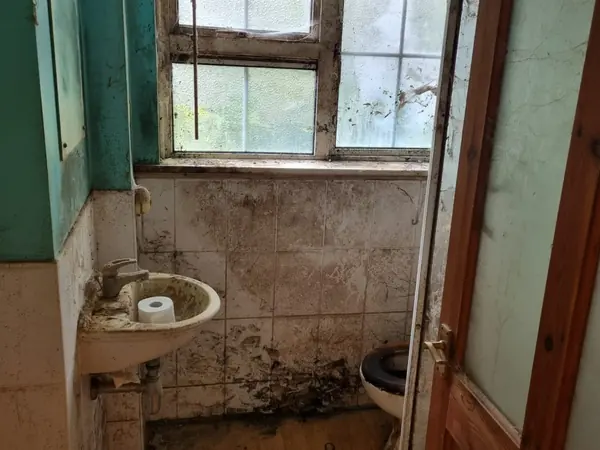
Probate work is slower to start and quicker to finish than people expect: weeks of paperwork, then one day with a van. If the flat has been shut up for a season, expect the fridge to be the worst part of the day and expect it to be dealt with quietly. There is more on how we handle probate house clearance on its own page.
End of tenancy clearance in Barbican
End of tenancy work is the other half of the diary here. A tenant leaves a City flat with a sofa, a bed and half a kitchen behind, the managing agent needs it empty before the check-out inspection, and nobody involved lives nearby. An end of tenancy clearance in Barbican is usually booked at two or three days' notice, done in one visit. Confirmed by email with photographs of the empty rooms. Landlords and agents ask for the waste transfer note on end of tenancy jobs as often as executors do. It goes over the same day.
Flat clearance in Barbican and the EC districts
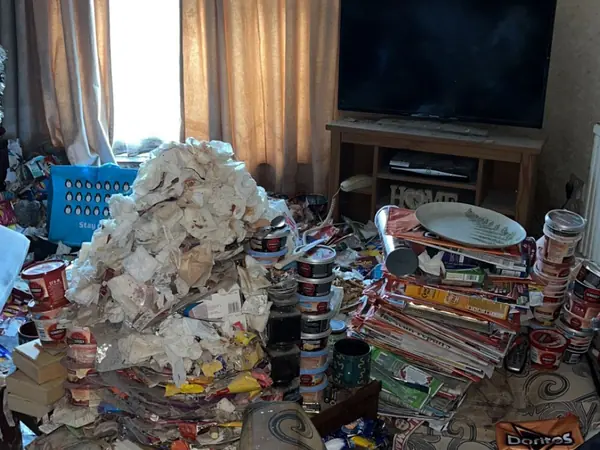
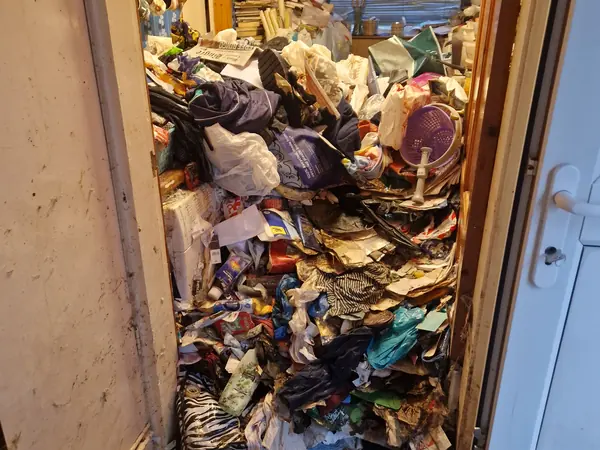
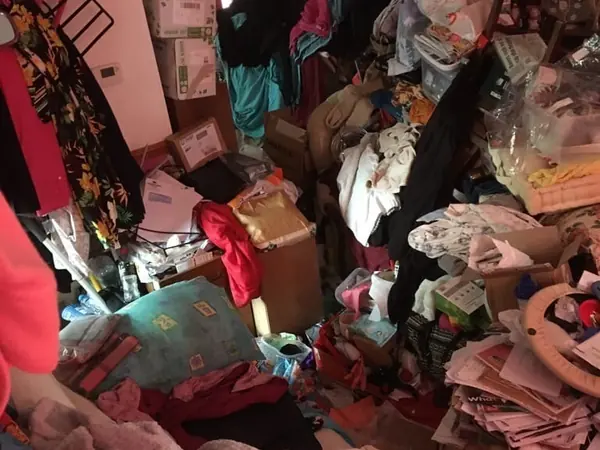
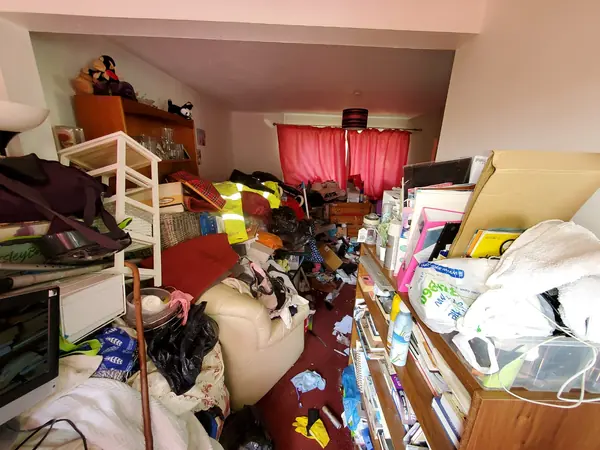
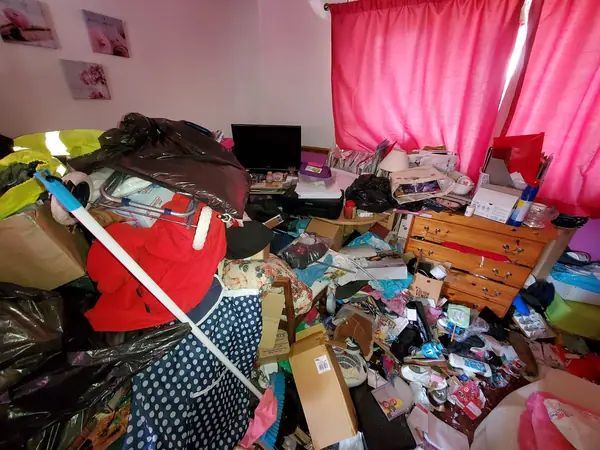
Almost everything we do here is a flat clearance rather than a house clearance in the literal sense. There are barely any houses in EC2Y, EC2V or EC4Y to clear. A flat clearance in the towers is planned round the lift and the loading point; on the terrace blocks and in the Golden Lane flats it is planned round the walkway and the length of the carry. Same job, different arithmetic. Properties packed to the ceiling get the same treatment as any other. No comment from the team, no photographs shared, just more hours and more loads. Where a flat is full and the lift is small, we'd rather book two days than rush one.
What we need to price it
Ring us on 0800 046 5555 or send photographs of each room through the form on this page, tell us the block and floor, the lift situation, whether there are mattresses or upholstered pieces. Whether anything must be kept back. We'll give you a figure over the phone based on the volume we expect to remove. We'll say what would change it. Payment is settled after the work on clearances; collections are invoiced and paid before the van comes. Fully insured, and everything that leaves the flat is accounted for. Whether it's a full house clearance in Barbican or one cupboard's worth from an office in EC2Y, the questions we ask are the same ones.
Common questions about house clearance in Barbican
Can you invoice a solicitor or an executor rather than a family member?
Yes, and we do it constantly. On a probate house clearance in Barbican the invoice goes to the firm acting for the estate, to the executor, or to the administrator. Whoever is instructing us — and it can be settled from the estate rather than out of anyone's pocket. We can also split it between a firm and a relative on the same job if that is what has been agreed.
Does somebody have to be there on the day?
No. Plenty of our Barbican work is done with nobody from the family in London. Keys come from a porter, a managing agent, a neighbour or a solicitor's office. They go back the same way. We confirm by email when the flat is empty and locked.
How long does a Barbican flat take?
Most one and two-bedroom flats here come out in a single day and a single load, provided the lift is working and the van can reach a loading point. A full flat with a small lift, or a walkway carry at the far end of a block, is safer booked as two days than rushed into one.
What can't you take away with the rest of the load?
Gas cylinders, solvents, car batteries and anything with a sharps risk have to be arranged separately. Tins of paint we can usually take if you tell us in advance. Fridges, freezers and mattresses go on their own routes because the law requires it, and upholstered seating is handled under the POPs rules. So tell us how many sofas, armchairs and beds there are when you ring.
Will I get proof of where it all went?
Yes. What can't be reused goes to a permitted transfer station and the waste transfer note comes back to us as paperwork. We send copies over afterwards, which is what executors and managing agents want for the file. Our waste carrier registration is CBDU419679 and you can check it yourself on the Environment Agency's public register.
Do you clear a single room or one item?
We do. A store cupboard, a stripped-out kitchen, one wardrobe left behind after a tenancy. The small collections across the EC and WC districts are booked the same way as a whole flat, on 0800 046 5555 or through the form on this page. The quote is free and doesn't commit you to anything.