Most of our house clearance work in Wallsend starts the same way — a call about a house nobody has lived in for a few months, and a loft nobody has been up in since the seventies. We have been clearing houses since 2007, and NE28 is one of those districts where you learn the back lanes quickly. Here is one of ours. It started with the fridges.
Four cold appliances came out of one house up at High Farm. A chest freezer, a fridge freezer, an upright fridge and an upright freezer — all of them in a semi off the top end of NE28, all of them still plugged in when the team walked round. October 2022, that one. It ran to two full loads on the same day, plus a mattress, and the van went back out to the transfer station a second time before the light went.
We were instructed on that job by a solicitors' practice on the high street here in Wallsend, acting for the estate. The grant of administration hadn't come through yet. That's normal and we're used to it: probate house clearance nearly always runs ahead of the paperwork, because the property gets emptied so it can be valued, marketed or handed back, and the bill sits until probate clears. Emails went back and forth for months, us asking politely whether there'd been any movement, them telling us the registry still hadn't issued. Nobody was being awkward on either side. Probate takes as long as it takes. We hold estate invoices for 180 days, and we say so up front rather than springing it on an executor later.
What a house clearance actually loads
That High Farm house was typical of the older stock round here. Wallsend built its housing for the yards — Swan Hunter turned out ships a few hundred yards from Segedunum, and the terraces and semis behind the Hadrian Road end went up for the men who worked them. Solid houses. Small back yards, coal-house sheds still standing in some of them, and lofts that have taken sixty years of accumulation.
A house clearance in one of those usually means the same shape of job: beds and mattresses, wardrobes that were built in the room and won't come out of the door in one piece, a three-piece suite, kitchen units full of pans, a shed at the bottom of the yard nobody's opened since the last owner stopped gardening. Then the cold appliances. Fridges, freezers and fridge freezers need their gas taken out under controlled conditions before the metal can be recycled, so they are counted separately on the estimate and go to a plant licensed to handle them.
Upholstered furniture is the other one people don't expect. Since the POPs guidance came in, sofas, armchairs, dining chairs with padded seats and office chairs can't be mixed in with general bulky waste — they go to incineration rather than landfill, and they travel separately. It's not a rule we invented and it isn't optional. If a suite is coming out of a house in Wallsend, that's where it goes.
Anything sound and saleable, we'd rather see it used again — charity shops and reuse projects round North Tyneside take furniture, crockery, books, tools, anything that isn't damaged. What's left is weighed in at a permitted transfer station and we keep the paperwork for it. Our waste carrier registration is CBDU419679, and it's on the invoice if anyone wants to check it against the Environment Agency register.
Where our house clearance runs go
Wallsend sits in NE28, between Walker and Howdon, with Willington Quay, Rosehill and the north end of the Tyne Tunnel below it and Battle Hill above. High Farm and Hadrian Park sit at the top of the district, Wallsend Green and Holy Cross toward the middle, Point Pleasant and Bigges Main down toward the river. That's our own patch and it's where our house clearance Wallsend jobs actually happen — NE28, start to finish.
We cover the neighbours too, and each has a page of its own: house clearance in North Shields fifteen minutes along the road, house clearance in Whitley Bay out on the coast, and house clearance in Jarrow across the water. Longbenton, Benton, Walkergate and Byker are the next places along the Metro line. We're across the water in South Shields often enough that Tyne and Wear rarely means a wasted morning either way, and North Tyneside as a council area is a single day's driving from end to end.
The Metro makes a difference to how we plan a day. Wallsend station on the yellow line means a lot of the streets round it are permit-parked and tight, and the crew will walk the route from the van to the front door before anything moves. If the only space is thirty yards up and round a corner, that's fine — it just changes how long the day takes, and we'd sooner tell you that at nine in the morning than at four in the afternoon.
A flat clearance, and one line that settled it
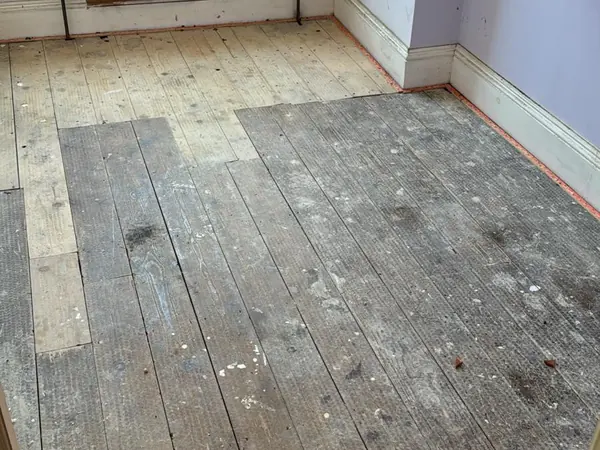
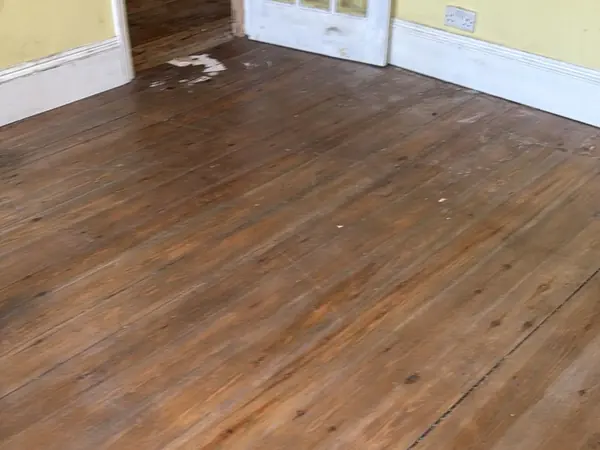
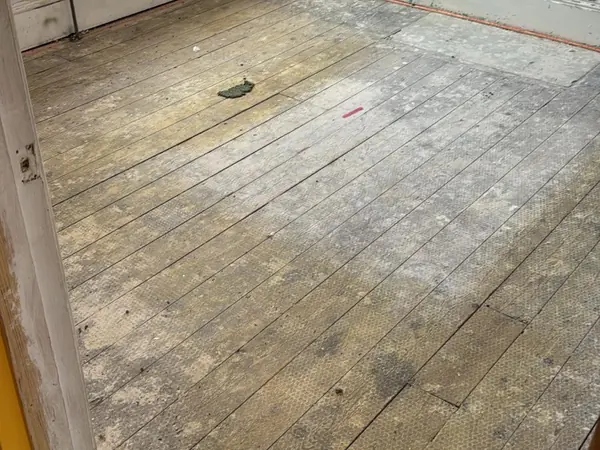
Not every job is two loads and a hard day. In October 2024 we were asked to quote for a flat clearance by a legal team acting for a client, working from an office a long way from the property. The enquiry arrived the way the good ones do — photographs attached, and a note of what had already gone: "We attach photos of the flat, please note the bed & cooker will have been removed."
So we asked back what we always ask before a flat clearance is booked: are the carpets and the white goods other than the cooker to be removed, or are they to remain? The reply was six words, and it settled the whole day.
"Carpets and Fridge can stay please."
That is worth more to a crew than three paragraphs of description. A fridge that stays isn't a cold appliance to degas and route to a licensed plant — it's simply something we work around and don't touch. Carpets that stay means no gripper rods coming up, no rolled carpet eating the front third of the van, and no dust through a property somebody still has to hand over. Carpets that come up would have changed the order of the rooms and the shape of the load. Six words, and both sides knew exactly what was happening before anyone set off.
It was booked for a Monday. The person arranging it wrote, "Please call me if I am not in the office, I will be around the building doing health and safety checks" — which is the sort of practical note that makes a distance job work.
Flat clearance in Wallsend comes up more than people expect. There are maisonettes and low-rise blocks all through the district, plus sheltered schemes where the flat has to be emptied and handed back to a fixed date. Stairs, a shared entrance, a bin store you can't block and a warden who needs telling before a van arrives — none of it is difficult, but all of it needs asking about first.
Garage and loft clearance, and the outhouses
Some of it isn't the house at all. Garage and loft clearance is its own kind of job, and in an area of yards, coal houses and single garages up a back lane, it's a standing part of the work. What comes out of a garage is nearly always heavier than anything indoors: a chest freezer that's been humming away out there for years, lengths of guttering propped behind the shed, a wooden bench with the slats gone soft, a swing seat with a faded canopy somebody always meant to re-cover, tins and tools and half a bag of sand.
Lofts are the opposite problem — light, endless, and reached through a hatch that was cut for a smaller person than the one going up it. We board what we need to, we don't drop anything through a ceiling, and we don't start a loft at four in the afternoon.
The team leader photographs a property on the walk round and again once it's empty. On a garage or a loft that's often the only record anybody has that it was ever full.
Estimates, and why we don't guess
The estimate goes to you in writing, over the phone or by email, before anything is booked. It's free and it doesn't commit you to anything. No survey fee and nothing decided on your doorstep while a van is idling outside.
What we can't do is see inside a photograph. Lofts, garages and the backs of built-in cupboards are where estimates move, so the team leader walks the property before starting and rings the office if it's going to run beyond what was agreed. Then it's your call. We don't carry on and settle it with you afterwards.
Executors, attorneys and people doing this from a distance
A fair share of our North East work is arranged by somebody who doesn't live locally. Sons in London, daughters in Northumberland, solicitors handling an estate they've never visited. Probate house clearance is very often done entirely by email and photographs, with the person signing it off several hundred miles away, and that works perfectly well. We invoice the acting solicitor, the attorney or the executor direct, rather than asking a grieving relative to stand in the middle of it.
But it needs one thing settled: a single name to ring on the day. We ask for one point of contact because decisions come up — a wall-mounted television that might stay, a box of photographs found in a wardrobe, a set of keys in a drawer. Crews don't make those calls themselves; they leave the item out on the side and ring. Small thing. It's the sort of small thing people remember afterwards.
If you can't be there at all, the keys can be posted back or left with a neighbour, and we'll send photographs of the empty rooms the same day.
The heavy ones
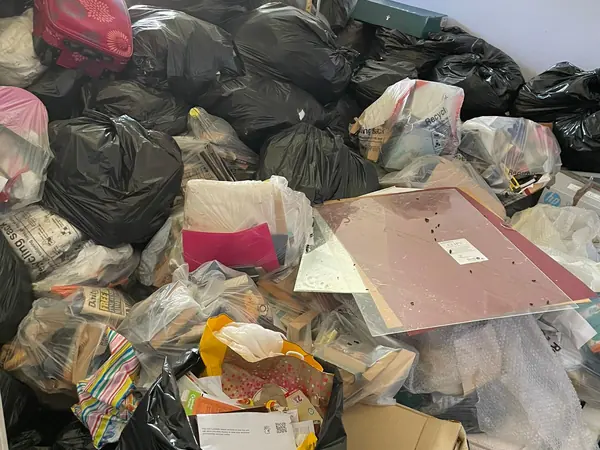
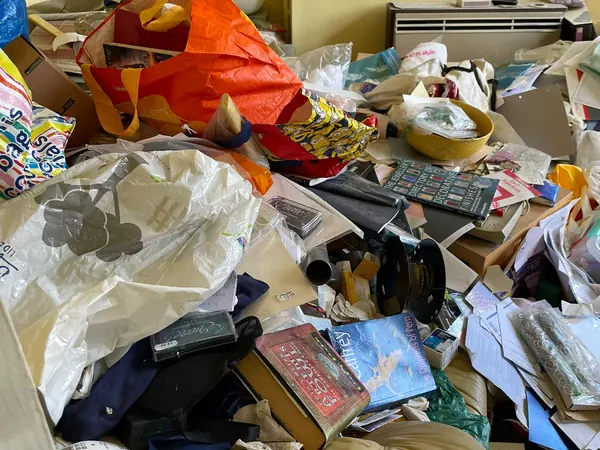
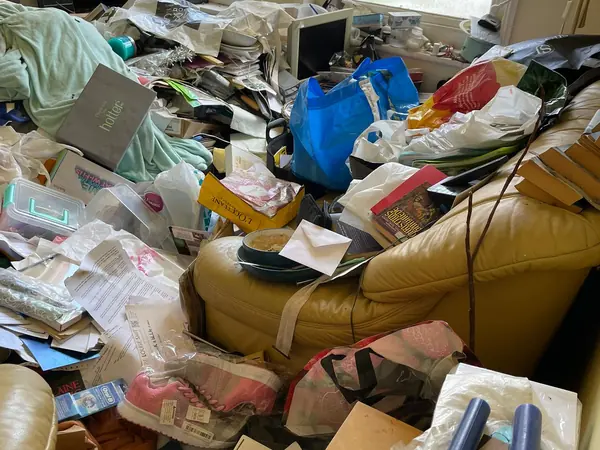
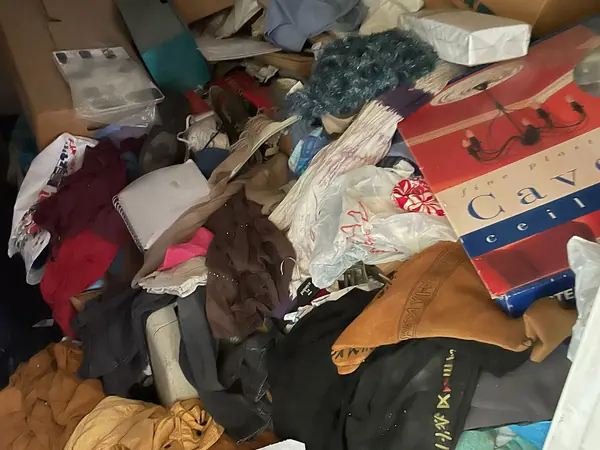
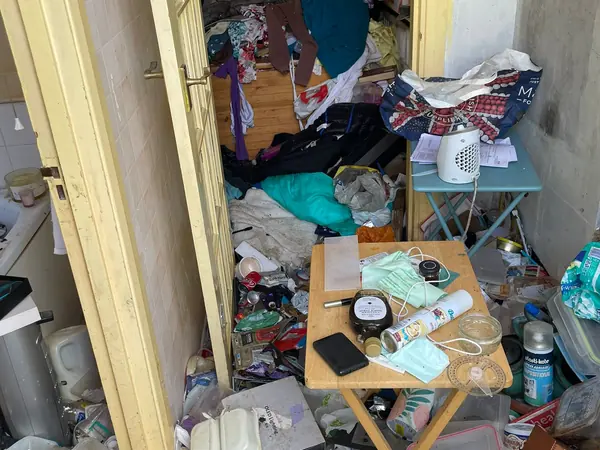
Houses that have got badly out of hand are part of the work, not an exception to it. Hoarder house clearance in Wallsend is something we've done in every part of NE28 — properties where the floor hadn't been seen in years and the front door only opened partway. Nobody in the crew comments, and nothing gets photographed for anyone's amusement. Tell us honestly what's behind the door — including anything verminous, or decaying food — and we'll bring the right kit and the right number of people. Surprises cost time; a straight answer on the phone costs nothing.
There are a few things that can't go on an ordinary load. Paint tins, solvents and car batteries the tips will take from a resident; gas bottles go back to the supplier, and asbestos needs a licensed route. Those need separate arrangements and we'll tell you where they can go — North Tyneside's household waste site takes most of it, and for anything trickier we can point you at a licensed specialist.
Common questions about house clearance in Wallsend
How long does a house clearance in Wallsend take?
Most are a single day, starting at nine or ten. A three-bedroom house with a full loft and a shed can run into a second day, and we'd tell you that at the estimate stage rather than at four in the afternoon.
Can you invoice a solicitor or an executor?
Yes, and we usually do. On estate work we invoice the acting solicitor, the attorney or the executor direct, and we hold estate invoices while probate is going through.
Do you take fridges and freezers?
We do. They're handled as cold appliances — degassed under controlled conditions at a licensed plant before the metal is recycled — so tell us how many there are, including any out in a shed or garage.
Can you do a flat clearance where some things are staying?
Yes, and it's better for everyone if you say so beforehand. Carpets, white goods, curtains, blinds, light fittings — list what stays and the crew works around it.
What happens to things that are still usable?
Furniture, crockery, books and tools that are sound go to charity shops and reuse projects around North Tyneside. The rest is weighed in at a permitted transfer station, and the paperwork is kept.
Do we need to be there on the day?
No. Somebody has to let us in, but that can be an agent or a neighbour, and keys can be posted back afterwards. We'll want one contact number for the day.
Getting a figure
Ring 0800 046 5555, or send photographs and a rough description through the form on this page — number of bedrooms, whether the loft and shed are included, what's staying, and how close a Luton van can get to the door. We'll come back with a real answer and a date.
The registration is held, the insurance is in place, and we've worked the Tyne long enough to know which streets in Wallsend mean leaving the van on the main road and carrying it out.