Most house clearance in Dawlish is arranged by somebody who no longer lives in the house — a relative over in Exeter, an executor two counties away, a landlord holding a spare set of keys and a completion date. We have been clearing houses in Devon since 2007, licensed and insured, and EX7 is a run we make constantly.
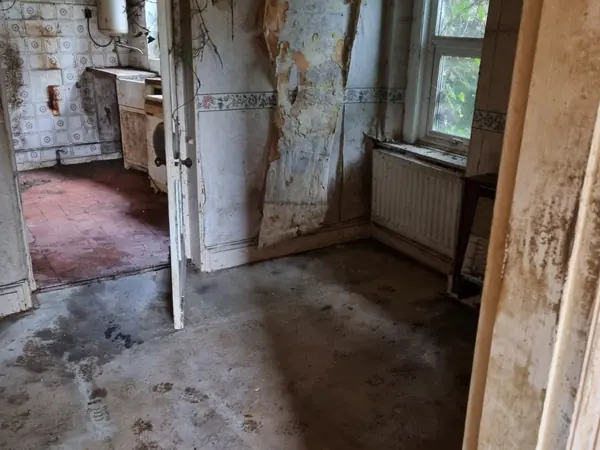
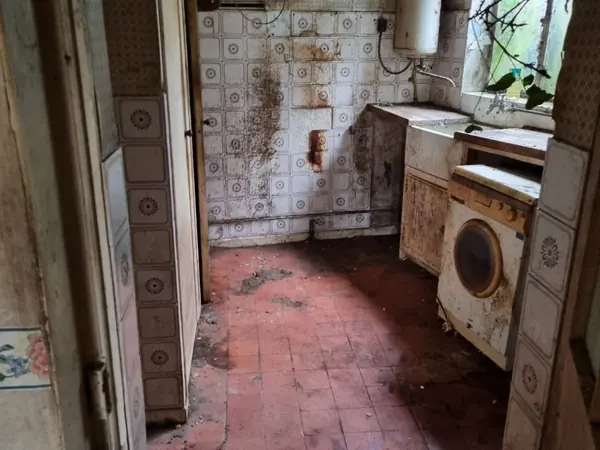
One of ours in EX7 went out in two loads. The van filled, left, and came back the same day for the rest. A second load on the day rather than a return visit later in the week, which is the difference between a house being finished and a house being half-done when somebody wants the keys back. A mattress went with it, and a mattress cannot be tipped in with the general load; it travels on its own and is dealt with separately at the other end. The clearance was arranged from a few miles up the coast at Teignmouth rather than from the property itself, which is how a good share of our Dawlish work runs. The morning after, the customer wrote: "Many thanks for all the hard work yesterday, I have paid the invoice this morning."
That is roughly the shape of a house clearance day in Dawlish. Arrive for nine. Work room by room. Judge by mid-morning whether one load will hold it, and if it won't, send the van off and have it back on the road again rather than asking a family to wait a fortnight for the rest.
What we've cleared around Dawlish and Teignbridge
Two loads in a day is common here and it often has nothing to do with the size of the house. A two-bedroom terrace behind the town that has been lived in since the sixties will beat a four-bedroom modern place on volume nearly every time, because the modern place has fitted wardrobes and a garage with a car in it. The terrace has the loft, the back bedroom and the cupboard under the stairs.
Furniture is the bulk of what leaves: wardrobes that were assembled in the room and won't come out of it whole, three-piece suites, bed frames, dining tables, chests of drawers, garden furniture gone green. Then the awkward middle — half-used tins in a shed, a mower that hasn't started in years, curtain poles, box files nobody will open again. Then the regulated things: upholstered seating, fridges and freezers, televisions and monitors, mattresses. Those four decide the shape of a house clearance day more than the number of bedrooms does, because not one of them can go on the back with everything else.
Garage and loft clearance in Dawlish
Garage and loft clearance is the part people underestimate, and in Dawlish it's the part the hill makes worse. Plenty of the garages in the older streets are nowhere near the house they belong to — a block of lock-ups round the corner, or a single up-and-over down an unmade lane, which means every box is carried twice. Lofts here are often boarded badly or not boarded at all, reached through a hatch on a landing with the stairwell straight below it, so the contents come down by hand, one man on the ladder and one taking it off him. Tell us at the quote stage that there's a garage and loft to do as well as the rooms and we'll bring the right ladder and plan the day around it. Tell us on the morning and we'll still do it, but the van goes twice.
Sheds, greenhouses, the space behind the greenhouse, the side return where the bikes went to die — all of that is ordinary house clearance work and none of it needs sorting before we arrive.
Keys through the post, meters read, photographs back
Not everyone can be there, and for a house clearance in Dawlish that's entirely normal — the property is here and the family is in London, Bristol or further. The arrangement is straightforward. Keys come to us by Special Delivery, wrapped properly, with the tracking receipt kept. On the day the team takes the electricity and gas readings off the meters — down to the decimal — so the accounts can be closed without a second journey, photographs every room once it's empty, and emails the lot through. The keys go back by post afterwards.
It works the same through a managing agent, a neighbour holding a spare set, or a solicitor's office.
Probate house clearance in Dawlish
A good share of what we do in EX7 is probate work, and probate house clearance has its own rhythm. Nothing goes until the executor says it can. Anything that looks like a document — a deed, a share certificate, a bank book, an old will — is set aside on the kitchen table rather than bagged. Wallets, jewellery, war medals, cash tucked into a handbag: same rule, handed over before we leave, and it surfaces more often than you'd think.
We can invoice the executor, the solicitor or the trustee directly rather than the person standing in the house, and payment can come out of the estate. If probate is still running, say so when you ring — it changes nothing about how we work, only who the paperwork goes to. There's a fuller explanation on our probate house clearance page.
Where Dawlish itself makes the job harder
The town is built on a hill that runs straight into the sea, and the streets show it. The Georgian and Victorian terraces around The Strand and Brunswick Place have no off-street parking at all. The lanes climbing away from the Lawn are narrow enough that a Luton box van has to be placed carefully rather than just pulled up. West Cliff and the roads above the station are steeper than they look on a map. We'd rather know in advance — a photograph of the frontage taken from across the road tells us more than a description does, and the team leader can plan the carry before anyone touches a wardrobe.
Down at Dawlish Warren it's different again: bungalows, chalets and park homes, generous drives, and the odd site with a barrier and a size limit we need to check first. Holcombe is a squeeze in either direction. Starcross and Kenton, over towards the EX6 side, tend to be easier — cottages with a lane behind, or newer builds with a proper driveway. Inland towards Ashcombe the passing places matter more than the postcode does.
The railway runs along the sea wall right through the middle of town, which everyone knows about, and Dawlish station and Dawlish Warren both sit on that line between Exeter and Newton Abbot. Newton Abbot is where the line splits for Torquay and for Plymouth. We mention the trains only because people ask whether coastal weather ever stops us: it stops the trains sometimes, not the van. The road in over Haldon or up from Teignmouth stays open — house clearance in Teignmouth is ten minutes along the coast, and house clearance in Newton Abbot about fifteen the other way.
The stuff itself, and what becomes of it
Furniture that somebody else could still use doesn't belong in a skip, so we try the local charity shops and reuse schemes first. Teignbridge has a decent spread of them, and a sound dining set or a working washing machine finds a home quickly enough. Books, crockery, tools, garden furniture, the same.
What can't be reused is taken to a permitted transfer station and weighed in, with a transfer note issued for every load. That paperwork is the whole point: it's the proof the contents of a Dawlish house didn't end up on a lane above Ashcombe. Our waste carrier registration with the Environment Agency is CBDU419679 and it's on their public register if you'd like to look.
Sofas, armchairs and other upholstered seating go down a separate route by law. Upholstered seating is treated as POP waste — the flame retardants in the foam have to be destroyed by incineration and can't be tipped or shredded with ordinary bulky waste. Fridges, freezers and air-conditioning units go for degassing. Televisions and monitors go as WEEE. Mattresses stay out of the general load and are broken down for their steel and foam. None of that is optional, and it's why each of those items is handled on its own rather than disappearing into the back of the van with the wardrobes.
Two things we genuinely cannot lift: asbestos in any form, and drums of paint, thinners, chemicals or gas cylinders. Some of Devon's recycling centres take small, bonded amounts by prior booking; paint and chemicals go as household hazardous waste; anything larger needs a specialist and we'll say so straight out rather than load it and hope.
End of tenancy work, full houses, and the ones nobody wants to describe on the phone
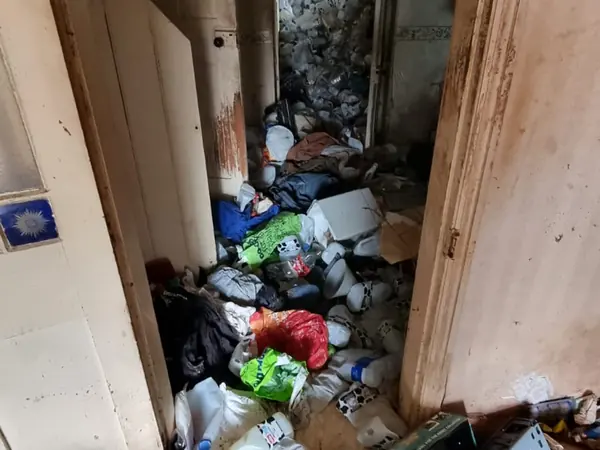
Landlords and holiday-let agents ring us for an end of tenancy clearance when a place comes back with furniture still in it, and an end of tenancy job runs to their checkout date rather than to our diary. A fair share of what we clear has been accumulating for thirty or forty years. Lofts where the boards vanished under boxes, a garage whose up-and-over door won't lift, a spare room stacked to the picture rail. Nobody needs to apologise for it and nobody needs to tidy first.
We turn up, we work through it room by room, and we don't discuss it afterwards. Hoarder house clearance is quiet work — nothing said on the doorstep, nothing said in the street, and the same two men back on a second day if a second day is needed. Our hoarder house clearance page goes into the heavier ones properly. Wallets, jewellery, war medals, bundles of cash in old handbags — we set anything like that aside and hand it over before we leave.
It surfaces more often than you'd think.
You don't have to empty drawers or bag anything up either. Cupboards, wardrobes, the under-stairs, the shed at the bottom of the garden — the team empties all of it.
What it costs, and the areas we come to
Send four or five photographs of the fullest rooms through the form on this page, tell us about the garage and loft as well as the rooms, and say whether there's anything upholstered, any fridge or freezer, any mattress. We'll give you a figure over the phone, free and with nothing to sign. The team leader walks the property when he arrives and flags anything the photographs didn't show before a single item moves, so nothing lands on you at the end of the day that wasn't said at the start. Or ring 0800 046 5555 and describe the house — for most people that's quicker than typing it out.
House clearance in Dawlish and Dawlish Warren, EX7, is home ground. Beyond that we cover Starcross, Kenton and Exminster in EX6, Teignmouth and Shaldon along the estuary, Newton Abbot, Kingsteignton and Kingskerswell inland, and Ashburton, Chudleigh and Buckfastleigh in TQ13. Teignbridge more or less end to end, with Exeter and Torbay either side of it. We go south of that as well: house clearance in Totnes and the villages around it make an easy enough day from here. Teams arrive for nine and aim to have the property emptied that day.
Ring the office and describe the house. We're licensed, insured, and we've been doing this in Devon long enough to know what the hill above the Lawn does to a wardrobe.
House clearance in Dawlish — common questions
Can you invoice a solicitor or an executor? Yes. On a probate house clearance we invoice the solicitor, the executor or the estate directly rather than sending anything to a relative personally, and the payment can come out of the estate. There is no deposit — the invoice follows once the property is empty.
Do I have to be there on the day? No. Plenty of the Dawlish houses we clear are arranged by someone who never sets foot in them. Keys come by post or from an agent, and photographs of the empty rooms go over the same day.
Do you do garage and loft clearance on their own? Yes. Say what is up there and how you reach it, because a hatch and a ladder is a different day to a fixed stair, and the garage door round here has often not been lifted in years.
How much notice do you need? Usually a few days. If there is a completion date or an end of tenancy checkout to work to, say so when you ring and we will book to it.
What happens to everything you take? Anything reusable goes to a charity shop or reuse project. The rest is weighed in at a licensed transfer station under our carrier registration, and the waste transfer note is yours if you want it for the file.
Will you take a hoarded house? Yes, without comment. Tell us the state of it when you ring so the right number of hands and the right number of days are booked in advance.